June 2026
MAPLESVILLE, Ala.—There’s a sticky note on Joe Parnell’s computer that reads, “Hope Is Not A Strategy.” For the President of Parnell Inc., a diversified timber and farming business based here in one form or another since 1962, the message is a daily reminder to be proactive during the toughest market stretches the timber industry has faced in decades.
Inside This Issue
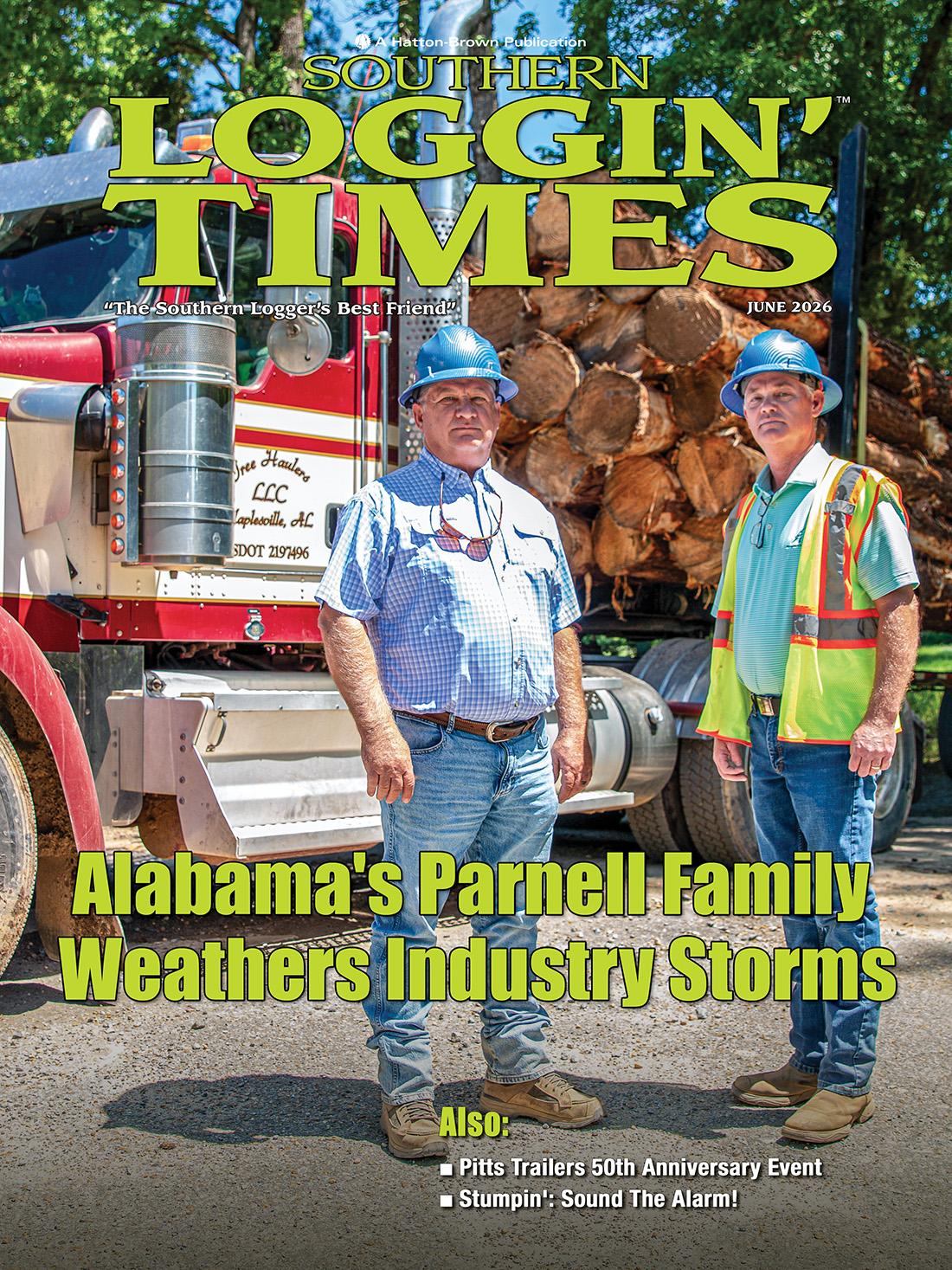
COVER: Taking Control
MAPLESVILLE, Ala.—There’s a sticky note on Joe Parnell’s computer that reads, “Hope Is Not A Strategy.” For the President of Parnell Inc., a diversified timber and farming business based here in one form or another since 1962, the message is a daily reminder to be proactive during the toughest market stretches the timber industry has faced in decades.
Article by Ford Boswell, Contributing Editor, Southern Loggin’ Times
SOUTHERN STUMPIN': Wake Up Call
The featured cover story in this issue of Southern Loggin’ Times is a profile of the Parnell family of Alabama by veteran SLT contributor Ford Boswell. Coincidentally, around the same time, Joseph Parnell, a well-known and highly respected member of the Southern logging community, recently wrote down and shared his thoughts on some of the challenges currently facing the industry; his post has since gone viral on social media. Since there’s no one more qualified to speak for loggers than loggers themselves, SLT editors decided to include Joseph’s editorial here for those of our readers who are not plugged into social media; his post is reprinted below with his permission.
INDUSTRY NEWS ROUNDUP
- FRA Names McDowell 2026 National Logger
- Manthei Buys Cahaba Veneer In Alabama
BIG 50
MAPLESVILLE, Ala.—There’s a sticky note on Joe Parnell’s computer that reads, “Hope Is Not A Strategy.” For the President of Parnell Inc., a diversified timber and farming business based here in one form or another since 1962, the message is a daily reminder to be proactive during the toughest market stretches the timber industry has faced in decades.
Article by Patrick Dunning, Associate Editor, Southern Loggin’ Times
Taking Control
The Parnell Family navigates downturn by focusing on efficiency, controlling what they can.
Article by Ford Boswell, Contributing Editor, Southern Loggin’ Times
MAPLESVILLE, Ala.—There’s a sticky note on Joe Parnell’s computer that reads, “Hope Is Not A Strategy.” For the President of Parnell Inc., a diversified timber and farming business based here in one form or another since 1962, the message is a daily reminder to be proactive during the toughest market stretches the timber industry has faced in decades.
Over the years, this family business has ebbed and flowed with market challenges, emerging technologies and innovations in equipment and services. Still, the goal has always been to eliminate waste and inefficiencies in order to operate as efficiently as possible.
Yet, these days, things seem different.
“Without a doubt, we are in one of the longest downturns of my career,” Parnell says. “It may not be the tightest, but it’s definitely the longest. Most downturns are 12 and 18 months, and we’ve been in a nearly five-year downturn. We probably haven’t had two weeks in the last two years when we haven’t been on wood quotas. And lately, it’s been so dry that the mills are full. So they’re limited on how much they’re running because markets are not great. When you have everybody throttled back to about 70%, there’s just not a lot of opportunity to get out and run. I hate to be so negative, but it is tough for rural Americans these days—and loggers need help, especially.”
From pandemicera shutdowns and supply chain disruptions to labor shortages, inflation, shifting economic uncertainty, and, lately, sky-rocketing fuel costs, logging contractors across the South have spent the past several years absorbing blow after blow.
Parnell also estimates that the company has incurred almost a 30% increase in operational costs over the past five years. To make matters worse, housing starts have posted four straight years of decline while existing home sales have hit their lowest levels in nearly three decades—a gut punch for an industry whose fortunes are tied directly to new construction.
But instead of waiting for conditions to improve, Parnell says the company has focused intensely on the things it can control. “We’re asking our people to conserve fuel,” he says. “We’re trying to minimize idle time and skid distances by the placement of decks. It makes a difference, especially when diesel fuel is as high as it is.
Operationally, the company is holding down expenses, running existing equipment longer and focus- ing on maintenance to keep the older machines running efficiently, only replacing equipment when they have to and, if and when they do, in some cases, buying used.
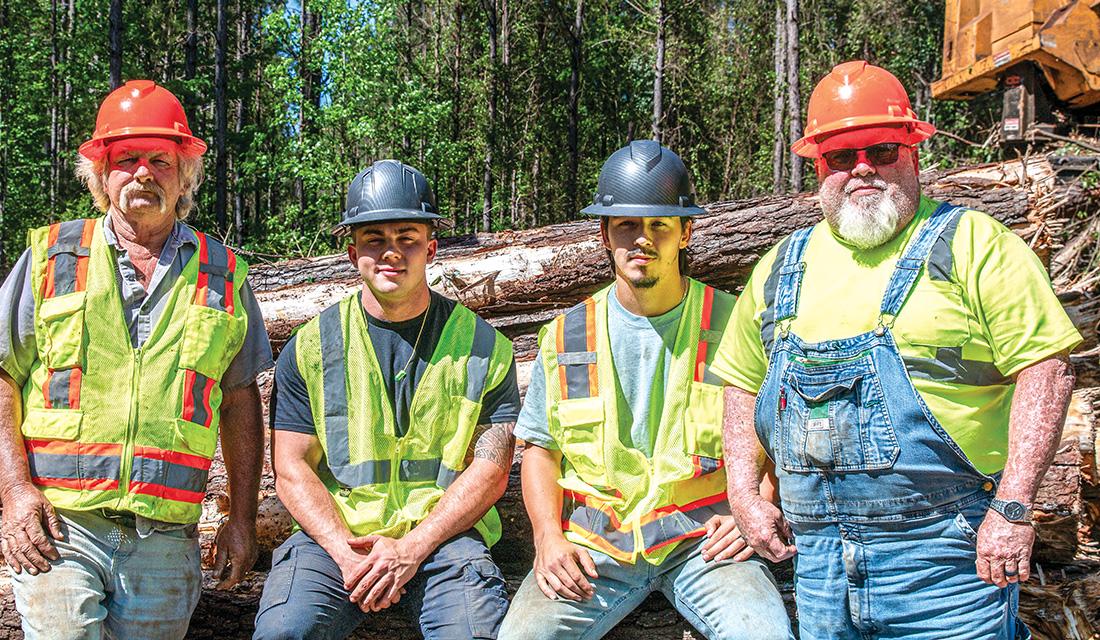
As President, Joe, 53, manages the business side of the company. His responsibilities primarily include overseeing timber purchasing and marketing, but he also assists with daily logistical tasks whenever necessary.
Meanwhile, his brother, Jeff, 59, as Vice President of Operations, handles production and operations. His routine is to keep the operation moving. He visits crews, maintains close contact with foremen, dispatches dozers to maintain access roads, dispatches trucks, and ensures that staff are correctly positioned.
A third Parnell brother, Jimmy, 61, acts as more of a silent partner, but is involved in all major business decisions, especially on the farming side. He also serves as the President and CEO of the Alabama Farmers Federation (ALFA), a position he’s held since 2012.
Have A Question?
Send Us A Message