
Feller-Buncher Destroyed By Fire
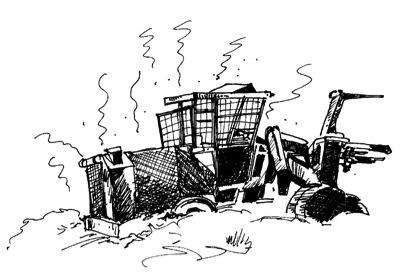 BACKGROUND: On a clear, sunny winter morning in the South a logger was felling pine trees with a feller-buncher machine.
PERSONAL CHARACTERISTICS: The operator was approximately 40 years old. He had been operating feller-bunchers and other logging machines for six years. He was trained to operate this particular machine.
UNSAFE ACT OR CONDITION: No unsafe act or condition was identified. Prior to starting the feller-buncher in the morning, the operator and logging contractor had installed a new battery and a new starter and had cleaned the engine compartment. The contractor considered this maintenance routine work. He had removed and replaced countless batteries and starters without incident. No spilled or leading fuel or other hazard was observed during the morning “pre-start” inspection.
ACCIDENT: While operating the machine, the operator saw flames behind him on both sides of the cab, apparently emanating from the engine compartment.
INJURY: The operator bailed out of the machine with a fire extinguisher in hand, but he could not extinguish the fire. He was not injured. The feller-buncher was engulfed in flames and was destroyed.
RECOMMENDATIONS FOR CORRECTION: The insurance investigator could not determine an exact cause for the fire but suspected that a spark ignited fuel in or around the fuel system. Machine operators should always be alert to the possibility that their machines may start to burn even after they have conducted a thorough pre-start inspection and cleaning. Logging contractors should consider the merits of buying new machines with automatic fire suppression systems and installing such systems on older machines. To operate properly, an automatic fire suppression system must be regularly maintained.
Courtesy of the Forest Resources Association: forestresources.org.
Latest News
International Forestry Group Tours Drax Biomass In Louisiana
Drax Biomass played host to a diverse group of international scientists and forestry experts at Morehouse BioEnergy on Monday, following an international conference in Little Rock. Jim Guldin, a supervisory research ecologist with the U.S.…
Southeastern Cohesive Wildland Fire Strategy Website Redesigned
In partnership with the Southeastern Cohesive Wildland Fire Strategy Coordinator, the office of the Southern Regional Extension Forester (SREF) is pleased to announce the updated Southeastern Strategy website, now with new resources that serve to…
Have A Question?
Send Us A Message