
Feller-Buncher Destroyed By Fire
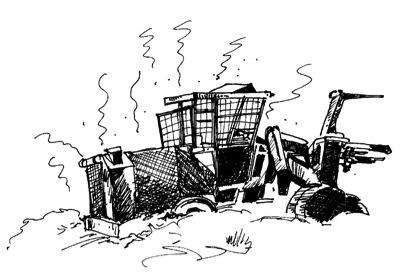 BACKGROUND: On a clear, sunny winter morning in the South a logger was felling pine trees with a feller-buncher machine.
PERSONAL CHARACTERISTICS: The operator was approximately 40 years old. He had been operating feller-bunchers and other logging machines for six years. He was trained to operate this particular machine.
UNSAFE ACT OR CONDITION: No unsafe act or condition was identified. Prior to starting the feller-buncher in the morning, the operator and logging contractor had installed a new battery and a new starter and had cleaned the engine compartment. The contractor considered this maintenance routine work. He had removed and replaced countless batteries and starters without incident. No spilled or leading fuel or other hazard was observed during the morning “pre-start” inspection.
ACCIDENT: While operating the machine, the operator saw flames behind him on both sides of the cab, apparently emanating from the engine compartment.
INJURY: The operator bailed out of the machine with a fire extinguisher in hand, but he could not extinguish the fire. He was not injured. The feller-buncher was engulfed in flames and was destroyed.
RECOMMENDATIONS FOR CORRECTION: The insurance investigator could not determine an exact cause for the fire but suspected that a spark ignited fuel in or around the fuel system. Machine operators should always be alert to the possibility that their machines may start to burn even after they have conducted a thorough pre-start inspection and cleaning. Logging contractors should consider the merits of buying new machines with automatic fire suppression systems and installing such systems on older machines. To operate properly, an automatic fire suppression system must be regularly maintained.
Courtesy of the Forest Resources Association: forestresources.org.
Latest News
Multi-Million Dollar Grant Will Help Protect Southern Longleaf Pines
The number of longleaf pine trees growing across Northwest Florida is set to increase, thanks to new partnerships aimed at protecting the iconic trees. Representatives from federal, state and local organizations gathered Tuesday afternoon at…
Campaign Launched To Restore Lost Pine Forest Destroyed In Texas
Nearing the one-year anniversary of the most destructive wildfire in Texas history, Texas Parks and Wildlife Department, Arbor Day Foundation and Texas A&M Forest Service recently appealed for help by launching the Lost Pines Forest…
Have A Question?
Send Us A Message