Gresham House To Acquire Majority Interest In Molpus Woodlands Group
Gresham House, a specialist alternative asset manager, has announced an agreement to acquire a majority interest in Mississippi-based Molpus Woodlands Group, creating one of the world’s largest timberland investment managers with approximately $8 billion of forestry assets under management (AUM). Financial terms were not disclosed, and the transaction remains subject to customary closing conditions, including regulatory approvals.
Gresham House, with $5 billion of forestry AUM, and Molpus Woodlands Group, with $3 billion forestry AUM, will together form the third largest Timberland Investment Manager, globally with operations in the UK, Ireland, U.S., Australia and New Zealand, managing over 2.2 million acres.
Molpus Woodlands Group’s existing leadership team comprising Terrell Winstead, Michael Cooper, George Dahduh, Tyler Rosamond, Chad McElvany, and Ashley Harris will continue to lead operations in the U.S. They will also join the Gresham House global executive management team and investment committees for the enlarged forestry platform alongside members of the Gresham House executive team. The Molpus team will continue in their current role and will maintain day-to-day operations, investment process and client service. The combined business will remain privately owned, aligning employee incentives with client outcomes.
Tony Dalwood, Gresham House CEO comments, “The Molpus Woodlands Group team brings outstanding on-the-ground forestry expertise, a demonstrated track record, and deep client relationships in their local markets, which are a key area of growth for us.”
Gresham House and Molpus Woodlands Group have raised approximately $2.5 billion in timberland mandates since 2020, including more than $1billion in 2025. With global LP investors increasingly recognising natural capital as an asset class, the ability to offer a fully global service aims to set the business apart as the go-to-manager for institutional investors in this space.
A defining strength of both businesses is the specialization in silviculture. Forestry assets are managed through deep, on-the-ground expertise integrated with institutional investment processes and new technology, for example with geographic information systems management (GIS), to maximize forestry income and capital. This approach, rooted in biological growth, land stewardship and long-term value creation, provides a robust platform.
Latest News
U.S. Lumber Coalition Pulls No Punches With New Year Statement
Softwood lumber prices remain at historically low levels. Prices today are 54% lower than their 1975 average and 49% lower than their 1995 average, adjusted for inflation, yet Canada and the National Assn. of Home…
American Loggers Council Launches Young Leaders Program
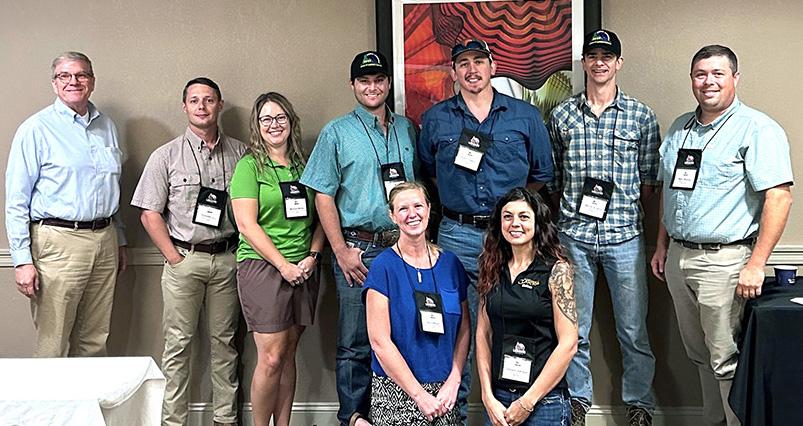
Established in 1994, the American Loggers Council (ALC) is the national voice of professional loggers, representing all 50 states, focusing on federal policy, forest health, and workforce support, ALC serves as a unifying force the…
Have A Question?
Send Us A Message