LEOA Graduates First Student Logger Class
Mississippi’s Hinds Community College graduated its first batch of students from the new Logging Equipment Operator Academy (LEOA) in December 2021. Four students completed the 16-week workforce certificate course and received a Professional Logger Manager (PLM) qualification, OSHA-10 safety training, CPR/First Aid and TeamSafe Trucking Module 1-2.
LEOA is located at Hinds’ Raymond, Miss. campus and features a John Deere rubber-tire simulator, two wheeled feller-bunchers, two track feller-bunchers and several desktop models with joysticks for teaching students with little to no experience how to operate in-woods machinery.
The four-month course includes classroom instruction on forestry concepts, business management specific to logging, PLM qualifications, tree identification, equipment maintenance and DOT regulations, as well as several hours of seat time on actual feller-bunchers and knuckleboom loaders.
Mississippi Loggers Assn. (MLA) and Mississippi Forestry Commission partnered with Hinds Community College, Justin McDermott at John Deere, and Scott Swanson, Stribling Equipment, to bring the program to life.
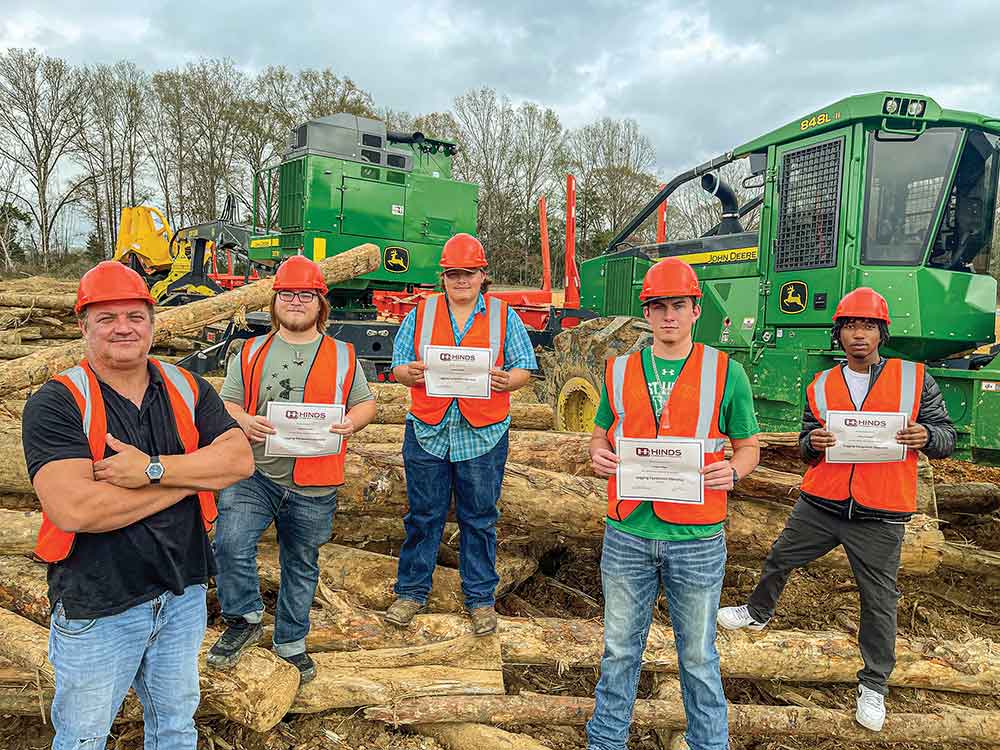 Of the four students who recently graduated, three have already taken jobs within the industry.
David Livingston, MLA Director, says they look to expand the LEOA program to existing loggers interested in training employees to operate other pieces of heavy equipment.
Latest News
Georgia Power Rethinks Coal-To-Biomass Conversion
In 2014, Georgia Power will file a request with the Georgia Public Service Commission (PSC) to decertify Plant Mitchell Unit 3 in Albany, Georgia. Further, the company will cancel the previously proposed conversion of the…
Timberland Donated For North Carolina Forestry Research
A large tract in Wilkes and Caldwell counties donated to the state will be managed by the N.C. Department of Agriculture & Consumer Services (NCDA&CS) for forestry research, said state officials. Deeds transferring 1,678 acres…
Have A Question?
Send Us A Message