
Log Pile Collapses On Truck Driver
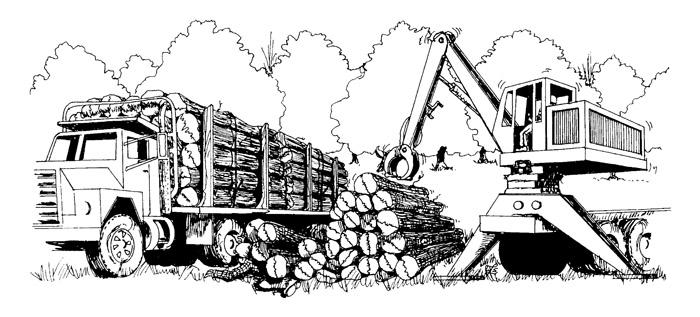 BACKGROUND: A truck driver was binding down a tractor-trailer load of hardwood logs at a timber harvesting operation on a clear, hot spring day in the southern Appalachians.
PERSONAL CHARACTERISTICS: The 40-year-old driver had worked as a truck driver for at least two years and was considered fully trained. He had no known physical disabilities and no history of accidents. He was wearing a hard hat.
UNSAFE ACT OR CONDITION: His truck was positioned alongside a hydraulic knuckleboom loader. Some yellow poplar logs had been stacked on the ground between the loader and the log trailer. The truck driver walked between the loaded trailer and the stack of yellow poplar logs to hook the load binders. The motor of the knuckleboom loader was still running.
ACCIDENT: The stack of logs gave way. The logs knocked the truck driver down, rolled over his back, and pinned him.
INJURY: The logs crushed the truck driver, causing severe internal injuries. Crew members immediately phoned 911, and the logs were removed from the injured man as quickly as possible using the knuckleboom loader and a chain saw. Other employees attempted to administer rescue breathing to the injured truck driver. The paramedics arrived 34 minutes after the phone call. The truck driver died on the way to the hospital.
RECOMMENDATIONS FOR CORRECTION:
- Loaded trucks should be moved a safe distance from the loading area, or other activities at the loading area should cease, before load binders are placed and secured.
- Stacks of logs should be placed so that danger of their rolling is minimized. Stack logs on the deck in a position perpendicular to the logs on the trailer. Chocks may help to prevent log movement.
- The truck driver and the loader operator should maintain communication and be aware of each others actions on the logging deck.
Courtesy of the Forest Resources Association: forestresources.org
Latest News
Southeast Could Become An Overdeveloped ‘Megalopolis’ In Next Half Century
Giant urban sprawl could pave over thousands of acres of Southeast forest and agricultural lands, connecting Raleigh to Atlanta by 2060, if growth continues at its current pace, according to a newly released research paper from the U.S. Geological Survey. “We could be...
Forest Health Experts Eye Hurricane Damage In N.C.’s Coastal Forests
For some residents of the North Carolina coast, the 2014 Independence Day weekend will be remembered not for fireworks and family cookouts, but for damage assessment and cleanup following the high winds and heavy rain that downed trees when Hurricane Arthur came...
Have A Question?
Send Us A Message