
Logging Equipment Loss Due To Fire
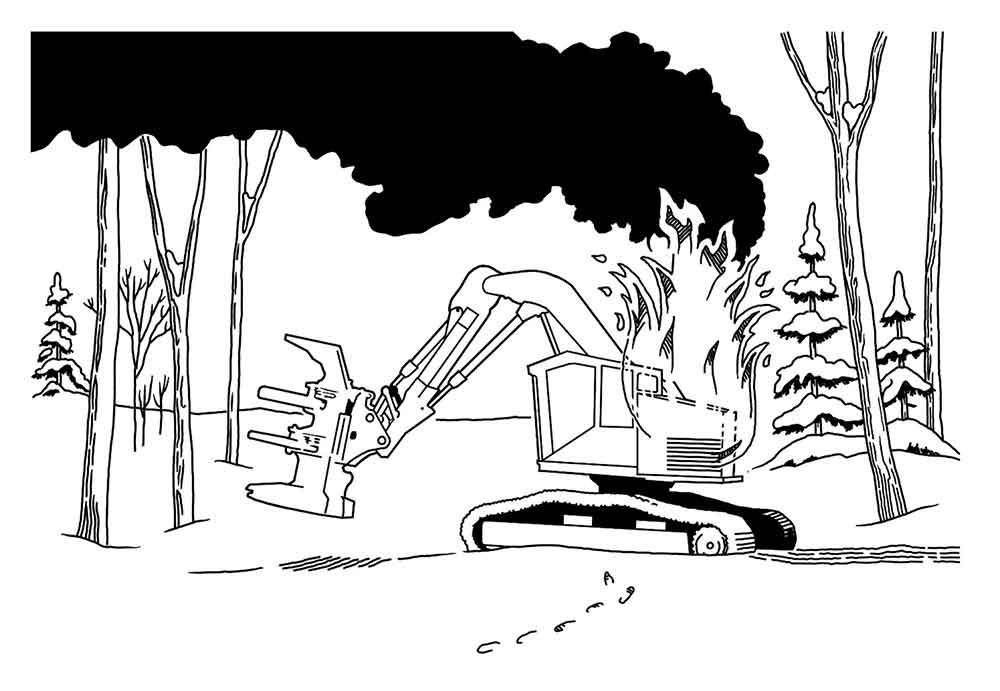 BACKGROUND: On a logging job in the Lake States Region during February, an operator of harvesting equipment had blown a hydraulic hose. He called for assistance from a skidder operator for a tow to the landing where the equipment could be repaired.
PERSONAL CHARACTERISTICS: The experienced business owner has been logging for nearly 50 years. This was the first time in his career that he experienced an equipment fire.
UNSAFE ACTS AND CONDITIONS: A blown hydraulic hose leaked a flammable fluid that came into contact with a hot surface.
ACCIDENT: While operating the equipment, the machine operator noticed a hydraulic hose had blown. The hose leaked a hydraulic fluid that was ignited when it contacted a hot surface. The operator and several other workers attempted to put out the fire with multiple fire extinguishers but were unsuccessful.
INJURY: No injuries resulted from the equipment fire. The machinery was a total loss that significantly impacted the production and profitability of the logging business.
FIRE PREVENTION FOR LOGGING EQUIPMENT:
- Identify ignition sources on logging equipment. Hot engines, electrical faults, and exhaust surfaces are considered “hot spots.”
- Schedule preventative maintenance to inspect machines for worn parts. Aging equipment may need to be inspected more often.
- Debris from logging, such as leaves, branches, and sawdust, can accumulate on hot surfaces. Inspect these areas several times throughout the day. Shut down the machine and clean debris from hot surfaces if found. Common spots for debris accumulation are belly pans, side shields, and access guards.
- Check for a buildup of grease, oil, and fuel from leaks or spills.
- Implement a proactive review of electrical systems and wiring components. Log inspections and monitor the frequency of inspections.
- Keep fully charged fire extinguishers on board the equipment.
- Shut down equipment before fueling.
- At the end of the day, remain on site for 15-30 minutes to monitor machinery for fire ignition.
- Consider installing an onboard fire suppression system.
Supplied by Forest Resources Association
Latest News
Tuscaloosa Man Inducted Into Alabama Foresters Hall Of Fame
Wayne Ford, former Tuscaloosa County Extension System coordinator, was recently inducted into the Alabama Foresters Hall of Fame. Ford is best known for coaching the Tuscaloosa County Natural Resources Club to 13 national championships in…
Contaminants: Water, Air, Sludge
In hydraulic oil, typically less than 0.1% water is considered excessive. Water can slow the filtering process; react with additives in the oil to produce other contaminants or acids; and reduce the lubricating effectiveness of…
Have A Question?
Send Us A Message