
Strategic Biofuels Publishes Forestry Feedstock Guide
Strategic Biofuels, a renewable fuels project development company, has published a free resource, “A Practical Guide to Forestry Feedstock Under the Renewable Fuel Standard.” This first-of-its-kind practical guide aims to help guide project developers in understanding the compliance requirements for forestry feedstock with the Environmental Protection Agency (EPA) regulations under the federal Renewable Fuel Standard (RFS). The publication was the culmination of work Strategic Biofuels conducted under a cooperative agreement signed with the U.S. Forest Service in 2022.
After realizing the guidance was unclear, Strategic Biofuels gathered input from the EPA, Weaver & Tidwell (Weaver), the U.S. Forest Service, other project developers, foresters, loggers, and related industry stakeholders to develop this practical guide. It is aimed at identifying the practical qualification requirements for forestry feedstock to aid in establishing a strong set of standards for the tracking system that enables the forestry feedstock sector to supply raw data that can accurately and conveniently be transmitted to the biofuel producer and validated by a third-party auditor for EPA compliance.
“Establishing a system and best practice to utilize abundant forestry feedstock became a necessity instead of a nice-to-have, and we are proud to share this guide with the industry at no cost through our partnership with the USDA Forest Service,” says Dr. Paul Schubert, CEO, Strategic Biofuels. “When it became clear to us that there was nothing like this guide during our own process with the EPA, we knew we had to support the industry by putting all of our work into this practical guide to save other developers and loggers critical time and effort as they plan and finance their own projects.”
The guide provides details on the information and documentation required for woody biomass to qualify for use as feedstock under the RFS. These include how to plan and manage feedstock supply, harvest the materials from logging operations, qualify thinnings and other materials, navigate areas at risk of wildfire, manage tribal lands, understand Strategic Biofuels’ current views on woody biomass supply, and map out decisions via a matrix. The guide also includes a two-part appendix that outlines key definitions and reporting information and resources.
Paul Oesterreich, Strategic Biofuels’ VP of Project Development adds, “While we will put the guide into practice at our Louisiana Green Fuels project, which will produce the world’s lowest carbon footprint sustainable aviation fuel (SAF) once in operation, we encourage other developers to leverage it as a starting point but know that it is critical that they work with the EPA and third-party compliance auditors directly. There are specifications required for individually intended feedstocks that should be reviewed by those organizations.”
Latest News

DRIVER FALLS OFF TRAILER WHILE CLEANING BARK
BACKGROUND: On a fall day in the Appalachians, a truck driver was clearing the loose bark and wood debris off his log trailer at a mill woodyard before pulling out to the public highway. Conditions…
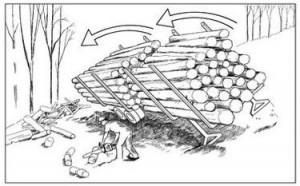
LOG TRAILER TIPS OVER ON TO FIREWOOD CUTTER
BACKGROUND: On a fall weekend day in the Appalachians, an individual was cutting firewood from unmerchantable tops and log pieces at a log deck. PERSONAL CHARACTERISTICS: The firewood cutter had previous timber cutting experience. He…
Have A Question?
Send Us A Message