
Virginia Logger Survey Focuses On Sustainability
How economically sustainable are Virginia’s logging businesses? That is the question that Scott Barrett, an extension specialist—forest operations at the Virginia Tech Dept. of Forest Resources and Environmental Conservation, asked Virginia’s loggers in a recent survey conducted that focused on the economic sustainability of Virginia-based logging businesses.
In this logging business survey, one of the questions asked business owners to rate their outlook on the economic sustainability of their logging business using a scale of 0-10 where 0 is very unsustainable, five is neutral, and 10 is very sustainable. Overall, across Virginia the average score was 4.6, which is on the unsustainable side of neutral. By far, the single most common response to this question was a 5, or “neutral.”
Another question on the survey asked about logging businesses’ profitability over the past year. Approximately half of businesses indicated that they were somewhere near break-even and only about a third of businesses indicated they were profitable during that timeframe.
Barrett and his team also asked logging businesses to rate the top challenges they face that impact the economic sustainability of their logging operation. Many of the top challenges are related to inflation in costs for fuel, parts for repair and maintenance, and equipment. Additional challenges were related to trucking, such as finding qualified drivers and the availability and cost of insurance for trucks. Other top challenges included the delivered price of wood relative to logging costs, as well as the amount of quota that the loggers are able to produce when mills are limiting deliveries.
Data from this survey shows that many logging businesses have been struggling in the past year or more. Many of the challenges identified in this survey are market-related. Improvement in the economic sustainability of logging businesses will likely require improvements in markets. Markets can and do change quickly, and the future is far from certain. However, it is important to recognize that if we are to have sustainable forestry, then we also need a healthy and sustainable logging workforce.
Latest News
Hurricane Michael Damages Millions Of Acres In Southeast
From: Southern Loggin' Times Editors Hurricane Michael made landfall October 10 near Mexico Beach, Fla., then moved on across parts of Alabama and into Georgia, the Carolinas and southeastern Virginia. Packing 155 MPH sustained winds, Michael came in just a mile per...
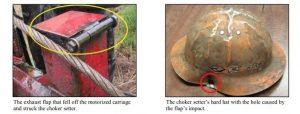
Choker Setter Struck By Falling Exhaust Flap
Background: On a winter day in the Pacific Northwest, two rigging crew members were setting chokers. One of them went to retrieve chokers from a dropline under a motorized carriage. Incident: As the one crew member was retrieving the chokers, the 5 ¼” by 5 ¼” metal...
Have A Question?
Send Us A Message