
What's Next?
Article by Jessica Johnson, Senior Associate Editor, Southern Loggin’ Times August 2022
NOTE: This month Jessica Johnson (our youngest editor, even though she’s been at it 10 years) asked to tackle the Stumpin’ column. It was her idea to focus on young loggers and the future of the industry, after the last two issues referenced older loggers retiring or considering it.
As I look at my little boys I often think about what’s next for them; how can I set them up for success? Is playing ball their future? Am I doing right by forcing them to eat zoodles? In my personal life, in the daily grind, it is easy to see how fast (and slow) time moves. I know one day I will no longer be my kids’ taxi service and will be ugly crying at their high school graduations. But that’s expected: the natural order of time marching on.
This industry is a bit different. The natural order of cut-skid-load is not going to change, and neither are the numbers coming into the bank—even though the numbers going out are only getting higher and higher. You might not see my name as much on these pages as you used to, but don’t worry. I’m not gone. I’m also not a casual observer of this industry like I once was. As I’ve become more intimately aware of the daily inner workings of owning a multi-crew operation in recent years, I’ve thought about what’s next: where do we go from here? How is everyone going to survive?
Things are getting tough. A “good” year now means hopefully not a greater than 10% loss. Woods hands and truck drivers are scarce in every corner of the South. What happens when there’s no one left to run the machines? Will the mills finally raise rates then? Loggers are working 16-hour days, making sure they are keeping every dime they can.
We might never be able to bring back the logging glory days of the ’80s and ’90s (which, if you ask me, some of those hairstyles at least shouldn’t be considered the glory days).
The Future Is…Cloudy
I was told recently that my generation, our generation of “young” loggers, is just getting started. The world needs paper towels and biomass energy. Things have been bad before, but we’ve always made it through. And we will make it through again.
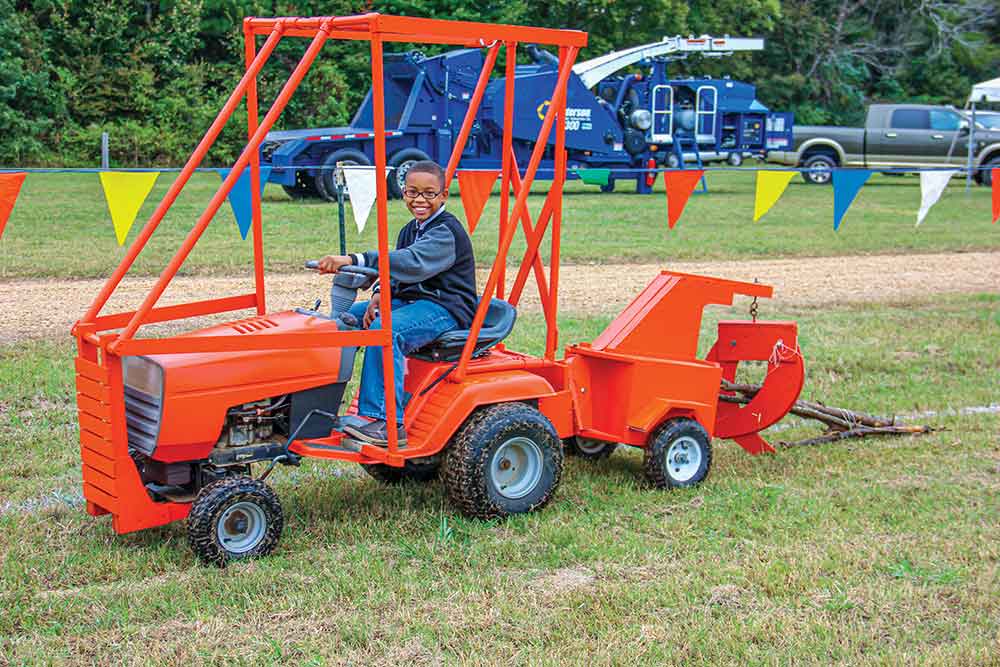
The future is in the forest. We just have to figure out how to make the most of it, to get everyone, from California to Maine, Wisconsin to Washington, DC, to little towns like Dodson, La., and everywhere in between, to agree that wood is good. When logging towns and logging families thrive, America thrives.
While I have a few fancy college degrees that I will have hopefully paid for before I die, I’m by no means a fancy thinker. And since I have a lot of questions and not a lot of answers, I figured I’d ask a few friends to help me out. What’s next for logging?
More than a few of them told me they really didn’t know what to do. So they’re doing what they always do—get up, go to work and advocate for themselves and their employees and families. One logger told me, “I don’t have to log and my woods crew knows it. But I always will because that’s what my family has always done.” But another said, “I won’t go broke doing this. It’s not worth it. If there comes a time where I have to quit, I will.” So how do we find the middle ground?
Mississippi’s Drew Sullivan told me he was scared to death about the future for all of us. “I sound like doom and gloom, but it’s scary,” he added. “This is all I know how to do. Our whole livelihood is wrapped up in this. I want to log; I love to log. I don’t want to get out. I don’t want to walk away from it. We’re not behind, but we’re not making any money. You can’t save. Ever since Covid, I cannot get ahead. We pay the bills and make a mediocre living.”
Sullivan said he has noticed a trend: mill companies setting up their own logging crews. It’s a trend I’ve seen in other parts of the country, but not so much in the South. I am not naïve enough to think it hasn’t started happening here though. There aren’t many 25 year-olds who can go to a bank and borrow the needed $1 million to get a logging job started. And let’s not forget the issue of finding good employees. The barriers to starting a logging job are far greater, it seems, than starting about any other business in America. No wonder most young loggers are second or third (or fourth or fifth) generation operators.
Whether they come from a long line of loggers or not is irrelevant. By and large they are overworked, trying to still do more and more, feeling like it doesn’t matter. When asked about a plan, most of the guys I spoke to said they didn’t have one. Sullivan laughed, “If you find anyone that has a plan, let me know their secret so I can make my own plan. I wish I had a plan. The plan is to keep running. We’re in survival mode.”
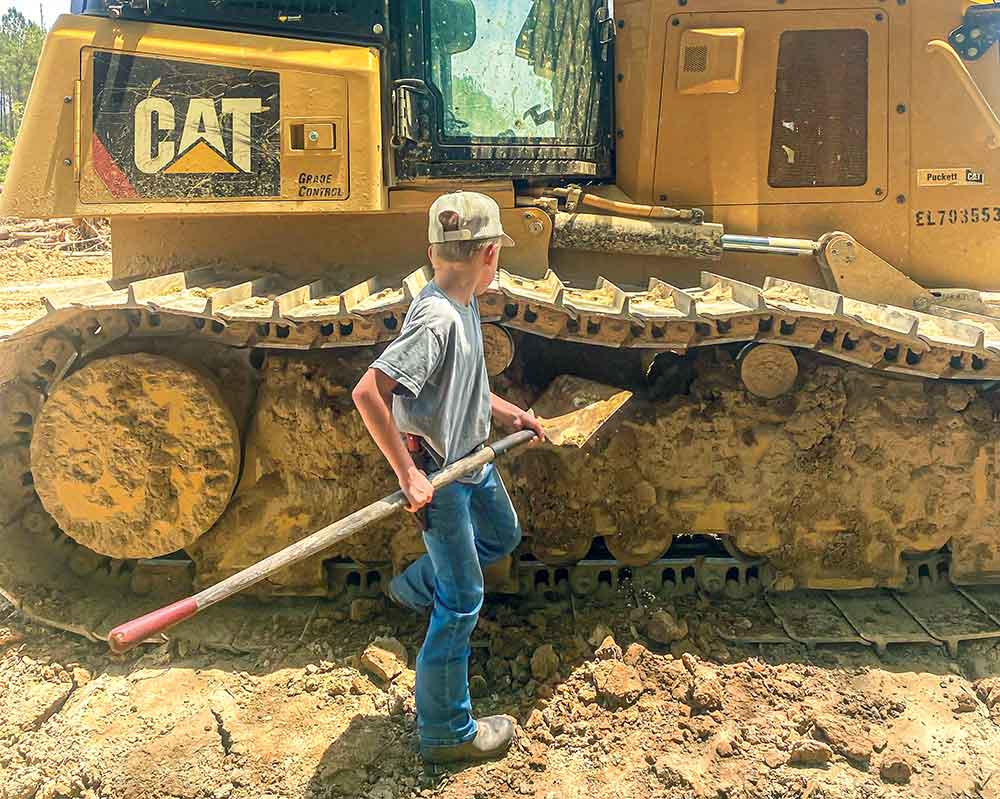
Sullivan, an active member of the Mississippi Loggers Assn., did say one of his plans is to stay engaged with the group. He is a big proponent of the idea that the collective voice is stronger and louder than a single person shouting. And, in my opinion, he’s right. Sticking together for a common goal has worked throughout history. But, when you’re talking about a group of people who make their living 15 miles off the paved road, I can see where it might be a challenge to get them together. Yet, the work of David Livingston in Mississippi, Toni McAllister in Louisiana, Crad Jaynes in South Carolina and all the rest of the incredibly important association folks will be a critical piece of the puzzle for the future.
Sullivan says he’s noticed that some of the older guys are perhaps hesitant to rock the boat with the big companies—or maybe they’ve just been fighting for so long they don’t have a lot of fight left. Either way, we, the young ones, have to keep fighting. To keep moving forward, we have to have a goal—a vision for the end of the line. I don’t know what that vision is. I want more paper to be used, in schools and in our homes. At work and at play I want to see things made of wood. I want to continue to see housing starts of single-family homes rise. I want to learn more about mass timber innovations and how influences of the forest can calm the senses. I want to not just buy a candle that smells like a tree. I want to see trees growing in planted rows as far as the horizon when I drive just 45 minutes from any major metro area in the South.
I did not grow up in the industry. I did not grow up in a small town. For generations us Johnsons have worked good honest jobs, but not 16-plus hour days six days a week in the elements. The powers that be of Southern Loggin’ Times took a chance on me, and I found my little place in the world. Southern logging got me a decade ago, and for better or worse it’s going to have me forever. Let’s knock some dents in this universe together. Let’s figure out what’s next and go for it, all guns blazing. And know I’m cheering for each and every one of you—every one of us—because the future is the forest. The future is you. What’s next?
Latest News
Emerald Ash Borer A Huge Threat To Virginia Forests
Virginia’s ash tree population likely will be decimated in the next decade by an invading green beetle smaller than a penny found as close to Lynchburg as Campbell County. While the emerald ash borer has not been confirmed in the George Washington or Jefferson...
Florida State Forester Jim Karels Recognized By State Cabinet
Florida State Forester Jim Karels was recognized by the Florida Cabinet recently, in appreciation for his leadership during the investigation into the deaths of 19 firefighters in the Yarnell Hill Fire in Arizona in 2013. “Jim demonstrated true leadership in lending...
NFWF, IP Announce Grants To Conserve, Enhance Cumberland Plateau Forestland
The National Fish and Wildlife Foundation (NFWF) and International Paper (IP) recently announced $743,000 in grants to support forestland restoration and working forests throughout the Cumberland Plateau of Tennessee, Kentucky and Alabama. The American Forest...
Highland Pellets To Build $130 Million Facility In Arkansas
Highland Pellets LLC, an Arkansas company, today announced the building of a 500,000 metric ton per year wood pellet facility in Pine Bluff, Arkansas. The $130 million plant will create more than 35 direct jobs and an additional 482 indirect jobs with a direct...
North Carolina Wood Pellet Plants: Economic Growth vs. Environmental Effects
By the end of 2015, if all goes as expected, a forest the size of Fayetteville will be fed into two huge wood pellet plants to create energy for European industry. That much everyone agrees on. Whether it's a good thing remains a subject of debate. Loggers, forestry...
Have A Question?
Send Us A Message