
Barber-Chair Tree Kills Logger
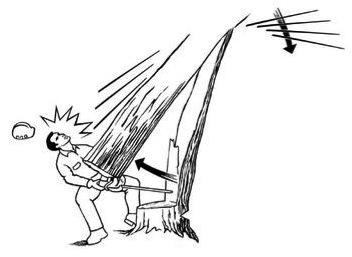 BACKGROUND: A logging crew member was hand-felling a sawtimber-sized tree on a late fall afternoon in the Southeastern U.S.
PERSONAL CHARACTERISTICS: The crew member was approximately 40 years old and had been working in logging operations his entire adult life. He performed a variety of operations on this logging crew. It is unknown whether he had received formal safety training, and his use of personal protective equipment was not reported.
UNSAFE ACTS & CONDITIONS: The logger saw that a sawtimber-sized tree had still not been cut inside the harvest area. He picked up a chain saw and began felling the tree. He did not check to see if there was enough gas in the chain saw’s tank. He completed the undercut and started his backcut, cutting inward toward the undercut. Before he could complete the backcut, the saw ran out of gas. The tree began to lean forward and applied heavy tension to the hinge’s “holding wood.”
ACCIDENT: The tree barber-chaired—the butt log split lengthwise, and the tree fell, and the splintered part kicked upward and back and struck the crew member on the side of his head.
INJURY: The force of the splintered butt log killed him.
RECOMMENDATIONS FOR CORRECTION: Employers must not allow employees to fell trees or operate chain saws unless they have received proper training in safe chain saw operation, felling procedures, and hazard recognition.
Always check the fuel and oil level and the proper working condition of a chain saw before using it. Running out of fuel during the felling process is very dangerous, as this incident shows.
In this incident, the timber cutter used a common felling method in which the undercut notch was less than 45 degrees, and he completed the backcut from the outside of the tree working inward toward the hinge. The problem with this technique is that the small-angle notch closes up before the tree has fallen even halfway to the ground. This puts stress on the hinge and causes fiber pull, sometimes splitting the butt log or creating a dangerous barber-chair. This common method also requires the timber cutter to continue standing at the tree and sawing through more of the hinge as the tree begins its fall, to keep the tree from rocking backward or stopping short of breaking.
A safer method of felling is to create an open-faced undercut notch, 70 to 90 degrees; and then to bore through the tree to create the hinge first, working backward toward the outside of the tree from the direction of the hinge to complete the cut, using wedges if necessary. Using this open-faced method, as taught in The Game of Logging training program, would have prevented the tree from barber-chairing; and even if the saw had run out of fuel, the uncut part of the tree would have held the tree in place and not caused it to fall prematurely.
Courtesy of the Forest Resources Association: forestresources.org.
Latest News
Canadian Lumber Tariffs Having Both Positive And Negative Impacts In South
Tariffs are a hot topic right now. But the tariff on Canadian lumber being sold into the U.S. is slightly different than some of the others you've been hearing about. This tariff took effect last year. Mississippi's sawmills are busier than they were this time last...
Virginia Company Expanding Chipping Operations, Adding Sawmill
Mountain Top Timber Products will invest $3.76 million in a long-abandoned industrial building in Dungannon to expand the company’s woodchipping operations and add a sawmill and dry kiln capacity. Over the next three years, the company expects to create 50 jobs and...
Have A Question?
Send Us A Message