
Feller-Buncher Rollover Injures Operator
 BACKGROUND: A logging crew was clearcutting a steep tract in the Appalachians. The feller-buncher, facing straight downhill, would cut trees on the way down a very steep slope and then would back up the hill for the next tree. The (mixed-stand) pine and hardwood trees were less than 10 inches in diameter. On this day, the feller-buncher was approximately one mile from the log deck on a hilltop along the back boundary of a tract. The operator was cutting the last few trees that needed to be felled.
PERSONAL CHARACTERISTICS: The operator had two years of experience running the feller-buncher. He had cut timber on steep terrain before, but not as steep as this tract.
UNSAFE ACT AND CONDITION: The rubber-tired feller-buncher was on terrain too steep for the machine to operate safely, and the operator was not wearing his seat belt.
ACCIDENT: The operator was backing up the hill and did not have any trees in the feller-buncher’s accumulator arms. The evidence at the scene indicates that he “got sideways” on the slope as the rear of the machine lifted up and became unstable due to the articulated steering. The machine tipped over sideways and then rolled side-over-side four times down the slope, traveling approximately 120 feet before coming to rest in an upright position against a tree.
INJURY: The operator suffered fractured bones in his head and back. He received severe lacerations as a result of being thrown around in the cab of the machine.
RECOMMENDATIONS FOR CORRECTION:
- Conduct frequent safety meetings, and remind logging equipment operators to wear their seat belts.
- Owners must enforce seat belt use.
- Train operators to know the limits of the equipment and the safe operating guidelines on steep terrain.
Courtesy of the Forest Resources Association: forestresources.org
Latest News
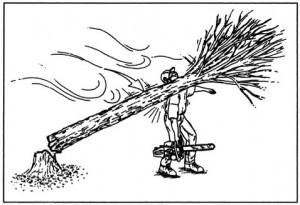
HAZARD RECOGNITION: HIGH WINDS
BACKGROUND: On an unusually windy day in the Lake States, a sawyer was select-harvesting log cabin poles with a 20-inch chain saw. The sawyer was working under the supervision of the cable skidder operator, who was transporting logs back to the landing. PERSONAL...
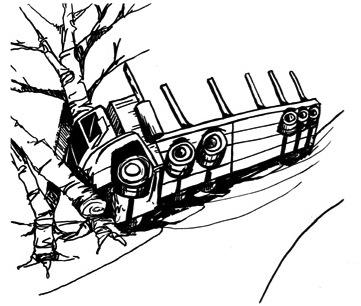
ICY CONDITIONS CONTRIBUTE TO LOG TRUCK CRASH
BACKGROUND: A log truck driver was driving an empty truck to a remote logging job site on a snowy November morning in the Lake States. Three inches of fresh snow had fallen on the pavement, causing slushy conditions. The truck travel route was…
Have A Question?
Send Us A Message